Fascinating Facts About Luxury Living Around the World

Luxury living around the world reveals a landscape defined by extremes—of design, location, and lifestyle. From ultra-secure private islands to architecturally experimental homes, high-end living is not simply about comfort. It is about control, identity, and the ability to shape environments in ways that reflect both personal taste and global influence.
What makes modern luxury particularly compelling is its visibility. Through media, digital platforms, and global real estate markets, these spaces are no longer hidden from view. Instead, they circulate as symbols—representing aspiration, exclusivity, and possibility. Examining these environments offers insight into how luxury functions today. It is not just a collection of expensive objects, but a system of design, geography, and cultural meaning that continues to evolve.
The World's Most Exclusive Luxury Enclaves
Across the globe, a select number of enclaves define the highest tier of residential living. These locations are not simply desirable—they are engineered to provide privacy, security, and proximity to influential networks.
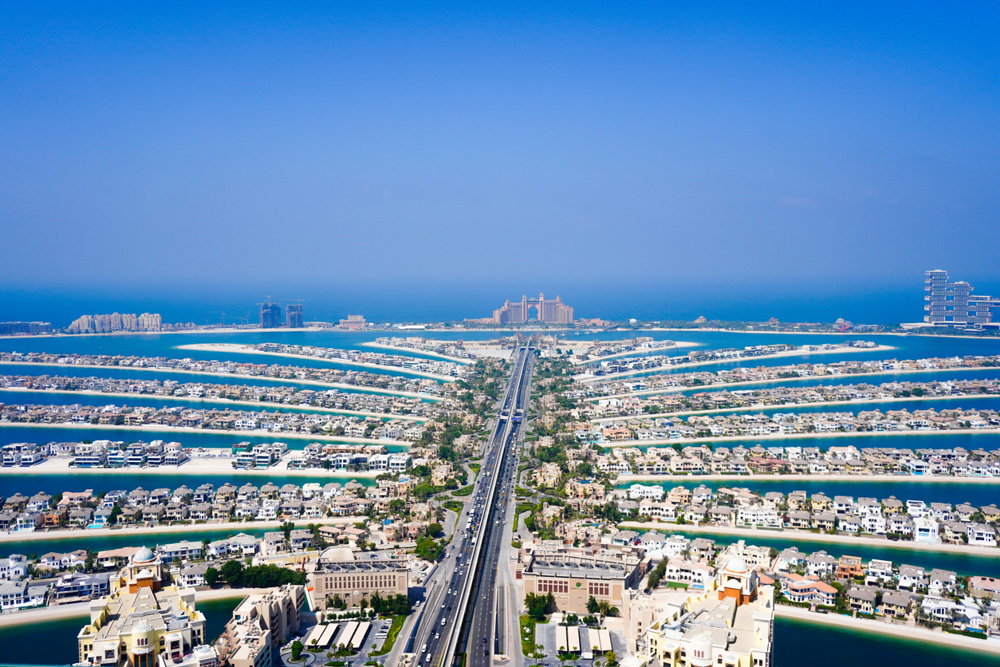
Beverly Hills remains one of the most recognizable examples, where estates are designed to shield residents while maintaining access to entertainment and business centers. In Dubai, Palm Jumeirah represents a different model, combining large-scale urban planning with resort-style living. Its artificial islands house villas, hotels, and private amenities within a controlled environment.
Other locations emphasize exclusivity through restriction. Indian Creek Island in Miami, often referred to as the “Billionaire Bunker,” limits access through a single guarded entry point and advanced surveillance systems. Similarly, destinations such as Monaco, Cannes, and Saint-Tropez function as seasonal hubs, where wealth is concentrated through events, yachting culture, and international tourism.
These enclaves demonstrate that luxury is often defined as much by separation as by abundance. Controlled access and curated environments shape both the experience and the perception of these spaces.
Record-Breaking Homes That Redefined Expensive
While those elite enclaves set the stage for extreme wealth, some individual properties push the boundaries even further — redefining what "expensive" actually means. Consider North Carolina's Lake Norman Island estate, listed at nearly $19 million — the highest in the Charlotte area. You're looking at a 12,000-square-foot home on a private island, featuring six bedrooms, nine bathrooms, an eight-car garage, and 1,250 feet of shoreline.
What makes a potential record sale here so striking is the context. Local luxury benchmarks barely cracked $12 million recently. This property doesn't just exceed those figures — it nearly doubles them. Custom-built in 2024, it's never been lived in, making it an untouched statement of extreme ambition. The hand-laid stone driveway alone cost an estimated $750,000 — a figure that rivals many homes' total price tags.
To put the scale of this estate into perspective, the volume of its eight-car garage structure could be estimated using basic cube calculation methods the same way architects and builders compute spatial dimensions from a single side length. For prospective buyers evaluating a property of this magnitude, using a home renovation cost estimator can help project realistic budgets for customizing or upgrading individual rooms before committing to such a significant investment.
The Most Unconventional Luxury Homes in the World
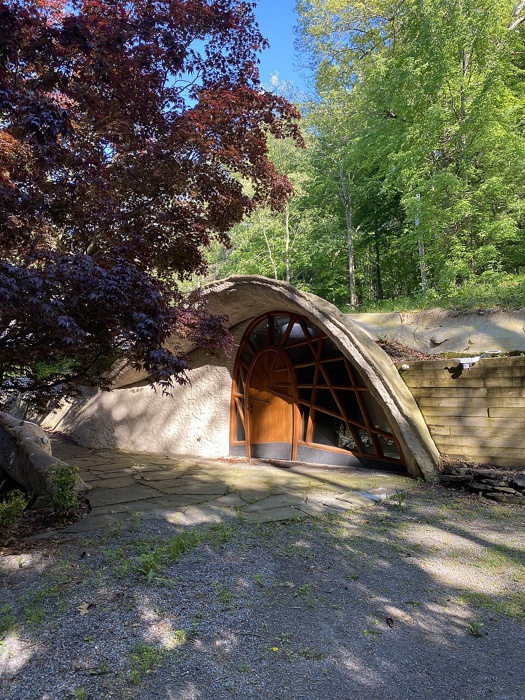
Some homes don't just shelter their owners — they challenge everything you thought architecture could be. These organic mansions and fantastical villas redefine luxury through pure imagination. Here are four homes that prove unconventional design is an art form:
- Mushroom House, New York — A whimsical, pod-style residence featuring intricate mosaic tiling throughout its interior.
- Nautilus House, Mexico City — A shell-shaped masterpiece inspired by Bio-Architecture, mimicking the organic forms of the underwater world.
- Bubble House, Cannes — Antti Lovag's 1,200-square-meter vision features 10 artist-decorated suites with futuristic curved lines.
- Crazy House, Vietnam — Dang Viet Nga's surreal hotel pushes boundaries with twisted staircases, irregular windows, and gravity-defying furniture.
These designs reflect a shift in how luxury is defined. Instead of emphasizing uniformity or tradition, they highlight individuality and experimentation. The home becomes a canvas, where architecture intersects with art. This approach repositions luxury as a form of creative freedom. The value lies not only in materials or location, but in the ability to realize unconventional ideas at scale.
The Global Nomad's Luxury Multi-Home Lifestyle
Luxury living increasingly extends beyond a single residence. High-net-worth individuals often maintain multiple homes across different regions, creating a lifestyle defined by movement and adaptability. This multi-home approach allows for alignment with seasonal patterns, business opportunities, and personal preferences.
A residence in New York may support financial activities, while properties in Europe or Asia provide access to cultural and social networks. Advances in technology enable remote management, ensuring continuity across locations. Financial considerations also play a role. Real estate functions not only as a living space, but as an asset.
Properties in high-demand markets can appreciate over time or generate income through selective use, reinforcing their role within broader investment strategies. This model reflects a shift from static ownership to dynamic living. Luxury is no longer tied to a single place, but to the ability to move seamlessly between multiple environments.
Crack open more surprising facts from the world of luxurious living.
Technology and Smart Homes in Luxury Living
Technology has become a defining feature of modern luxury homes, transforming them into highly responsive and intelligent environments. Smart systems now control lighting, climate, security, and entertainment, allowing spaces to adapt seamlessly to individual preferences. These systems are often integrated into a single interface, enabling precise customization and effortless management.
Automation extends this functionality further. Homes can adjust temperature, lighting, and ambiance in real time based on occupancy, time of day, or behavioral patterns. Advanced security features—including biometric access, and predictive monitoring—add another layer of control, ensuring both safety and privacy. At the same time, global connectivity allows owners to manage multiple properties from anywhere, reinforcing the flexibility of modern luxury living.
This integration reflects a broader shift toward efficiency and control. Technology is no longer an add-on—it is embedded within the architecture itself. In this context, luxury is defined not only by materials or location, but by how seamlessly a space responds to its occupant, blending convenience with precision.
Wellness Spaces Defining Today's Luxury Homes
Luxury homes today have moved well beyond marble countertops and high-end appliances — they're being designed as full wellness ecosystems built around your physical and mental recovery. Spa Retreats and Biophilic Interiors are now standard expectations, not upgrades. Here's what defines these spaces:
- Spa-inspired bathrooms featuring infrared saunas, cold plunge pools, chromotherapy lighting, and magnesium baths
- Biohacking fitness zones with cryotherapy booths, hyperbaric oxygen units, and AI-powered performance monitoring
- Mental wellness sanctuaries including floatation tanks, soundproofed meditation rooms, and digital-detox pods
- Smart wellness technology controlling circadian lighting, air quality, and real-time health insights
These aren't luxuries anymore — they're the new blueprint for how you live, recover, and thrive at home. Wellness architecture responds to a growing awareness of how the built environment directly impacts health, making intentional design choices as essential as any high-end finish.
Sustainability and the New Definition of Luxury
Sustainability is reshaping how luxury is understood, introducing new priorities that extend beyond aesthetics and scale. Environmental considerations are no longer secondary—they are central to the design and construction of high-end properties. This shift reflects a growing awareness of how architecture impacts both the environment and long-term livability.
Modern luxury developments increasingly incorporate eco-friendly materials, renewable energy systems, and efficient resource management. Features such as solar integration, water recycling, and passive cooling are designed to reduce environmental impact while maintaining high standards of comfort. These elements are often integrated subtly, preserving the visual and experiential qualities expected of luxury spaces.
This evolution signals a change in values. Luxury is moving away from visible excess toward considered design, where responsibility and refinement coexist. For many buyers, sustainability enhances rather than limits desirability, aligning personal aspiration with broader environmental awareness.
Luxury Living in Pop Culture and Media
While these environments exist in reality, their global visibility is largely shaped by pop culture. Television series such as Succession and Selling Sunset, along with films centered on elite lifestyles, present curated portrayals of high-end living. These narratives emphasize architectural scale, refined interiors, and tightly controlled social circles, translating complex systems into clear and recognizable visual patterns.
Social media intensifies this effect by extending access to these spaces. Influencers and public figures document homes, travel, and routines, turning private environments into widely circulated imagery. Over time, this creates a feedback loop: media shapes expectations, and real-world developments increasingly mirror those expectations, reinforcing luxury as both a lived reality and a shared cultural image.
The Psychology Behind Fascination With Luxury
The appeal of luxury living is deeply rooted in psychology. Exposure to expansive homes, exclusive locations, and curated environments evokes associations with success, stability, and control. These associations influence how wealth is perceived, positioning luxury as a visible marker of achievement and security.
At the same time, luxury operates as a system of symbolic communication. Properties, design choices, and locations signal identity and belonging, often carrying meaning beyond their functional purpose. This explains why fascination with luxury extends beyond ownership—it reflects broader desires for recognition, self-definition, and a sense of place within a larger social hierarchy.
The Globalization of Luxury Living
Luxury living has become increasingly global, reflecting the interconnected nature of modern wealth and mobility. High-end properties are distributed across major international hubs such as Dubai, London, New York, and Singapore, each offering distinct advantages tied to finance, culture, or lifestyle. These cities function as key nodes within a broader global network.
Movement between these locations reinforces a continuous system rather than isolated markets. Buyers navigate multiple regions, responding to shifting economic conditions and personal priorities. As a result, luxury is no longer defined by a single destination—it is shaped by the ability to operate within a global landscape of opportunities and experiences.
Conclusion
Luxury living around the world is defined by more than price or scale. It reflects a complex system of design, geography, and cultural meaning, shaped by both real-world practices and media representation.
From exclusive enclaves to unconventional architecture, these environments demonstrate how wealth is expressed through space. At the same time, their visibility through pop culture and digital platforms has transformed them into shared symbols of aspiration.
Ultimately, luxury living is not only about where or how people live—it is about how those spaces are imagined, interpreted, and continuously redefined within a global cultural landscape.